
CR-410 PB Peanut Butter colorimeter
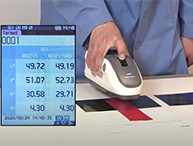
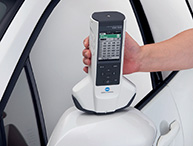
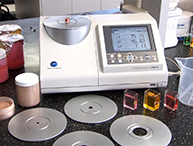
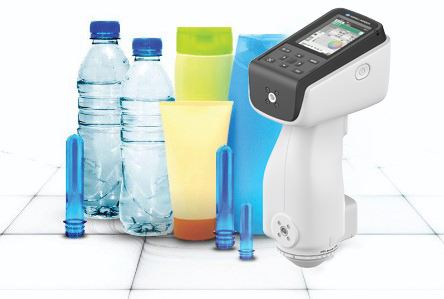
The CR-410PB handheld peanut butter colorimeter measures the color and quality of both peanut butter and whole roasted peanuts. The instrument is a low-cost option that is easy-to-use, portable, and a time saver when it comes to visual evaluation using color standards.
The CR-410PB handheld peanut butter colorimeter measures the color of peanut butter and whole roasted peanuts according to USDA standards more accurately than the competition. A specialty index simplifies readings by determining one number which is calculated to correlate to USDA standards Grade A and Grade B. This device is affordable, portable, and features a low cost of ownership. It has the ability to interface with PC color data software such as SpectraMagic NX and is easy-to-use. Simply press one button to measure the color and quality of the product.
- Easy to use – press one button to calculate the results
- Portable – hand-held design enables the instrument to be taken anywhere
- Affordable – priced affordably and designed for low-cost maintenance
- USDA standards – calculates number based on USDA standards such as Grade A and Grade B
- Reliable – extremely reliable and repeatable results
- Time-saving – instantaneously calculates measurement
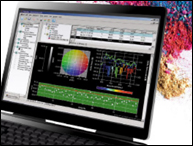
- Edit and manage data – can interface with PC color data software such as SpectraMagic NX
- Name
- Chroma Meters Measuring Head
- Model
- CR-410 Head
- Illuminating/viewing system
- Wide-area illumination/0° viewing angle (specular component included)
- Detector
- Silicon photocells (6)
- Display range
- Y: 0.01% to 160.00% (reflectance)
- Light source
- Pulsed xenon lamp
- Measurement
- time 1 sec.
- Minimum measurement interval
- 3 sec.
- Battery performance
- Approx. 800 measurements (when using batteries under Konica Minolta's testing conditions)
- Measurement/illumination area
- Φ50mm/ Φ53mm
- Repeatability
- Within ΔE*ab 0.07 standard deviation
(when the white calibration plate is measured 30 times at intervals of 10 seconds)
- Inter-instrument agreement
- ΔE*ab: Within 0.8
Average of 12 BCRA Series II colors
- Observer
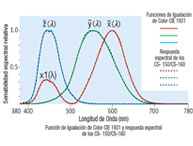
- 2 degree; Closely matches CIE 1931 Standard Observer
- Illuminant*1
- *C, D65
- Display*1
- *Chroma values; color difference values; PASS/WARN/FAIL display
- Tolerance judgment*1
- * Color difference tolerance (box tolerance and elliptical tolerance)
- Color space/colorimetric data
- * XYZ, Yxy, L*a*b*, Hunter Lab, L*C*h, Munsell (Illuminant C only), CMC (l:c), CIE1994, Lab99, LCh99, CIE2000, CIE WI/Tw (Illuminant D65 only), WI ASTM E313 (Illuminant C only), YI ASTM D1925 (Illuminant C only), YI ASTM E313 (Illuminant C only), User index (Up to 6 can be registered from computer)
- Languages
- Operating keys: English
* LCD: English (default), German, French, Italian, Spanish, Japanese
- Storable data sets
- 1,000 (Measuring head and data processor save different data)
- Color-difference target colors
- 100
- Calibration channels*1
- * 20 channels (ch00: White calibration; ch01 to ch19: User calibration )
- Display
- Dot-matrix LCD with backlight (15 chars × 9 lines + 1 line for icon display)
- Interface
- RS-232 compliant (for data processor/PC)
* Baud rate: 4,800, 9,600, 19,200 (bps); Set at 9600 when shipped from factory
- Power source
- Four AAA size alkaline or Ni-MH batteries
AC Adapter AC-A17 AC120V 50-60Hz 0.4A (for N. America and Japan) AC230V 50-60Hz 0.4A (for worldwide except N. America)
- Dimensions (W × H × D) mm
- 102 × 244 × 63mm
- Weight
- Approximately 550 g
(including 4 AAA size batteries and not including RS-232C cable)
- Approximately 570g
- (including 4 AAA size batteries and not including RS-232C cable)
- Operating temperature/humidity range
- 0 to 40°C, relative humidity 85% or less with no condensation
- Storage temperature/humidity range
- -20 to 40°C, relative humidity 85% or less with no condensation
- Other
- LCD backlight ON/OFF function (When on, backlight stays ON for 30 seconds after last key or measurement operation)
*1 indicates when connected to the Data Processor or when not set using the Data Processor or the optional software, that some of the function are not available when the measuring head is not connected.
- Name
- Data Processor
- Model
- DP-400
- Display range
- Y: 0.01% to 160.00% (reflectance)
- Measurement time*2
- * 1 sec.
- Minimum measurement interval*2
- * 3 sec.
- Battery performance
- Approx. 800 measurements (when using batteries under Konica Minolta's testing conditions)
- Illuminant
- C, D65
- Display
- Chroma values; color difference values; color difference graphs; PASS/WARN/FAIL display
- Tolerance judgment*2
- * Color-difference tolerance (box tolerance and elliptical tolerance) Only for display function
- Color space/colorimetric data
- * XYZ, Yxy, L*a*b*, Hunter Lab, L*C*h, Munsell (Illuminant C only), CMC (l:c), CIE1994, Lab99, LCh99, CIE2000, CIE WI/Tw (Illuminant D65 only), WI ASTM E313 (Illuminant C only), YI ASTM D1925 (Illuminant C only), YI ASTM E313 (Illuminant C only), User index (Up to 6 registered in the measuring head can be used)
- Languages
- Operating keys: English
* LCD: English (default), German, French, Italian, Spanish, Japanese
- Storable data sets
- Max. 2,000 pieces of data (divided into 100 pages)
Deletion and Undoing of selected stored data (one or all data) are possible
- Color-difference target colors*2
- * Only for the operating function (100 pieces of data when the measuring head is connected; input of measurement values or numeric) (Independent from page function)
- Calibration channels*2
- * Only for the operating function (20 channels when the measuring head is connected
(Channel 00: White calibration; Channels 01 through 19: User calibration)
- Page function
- 100 pages
- Display
- Dot-matrix LCD with backlight (16 characters x 9 lines + 1 line for icon display) Contrast adjustment
- Printer
- 384-dot line thermal printer (can also print graphs); Automatic printing for each measurement (can be set not to print)
- Statistical function
- Maximum, minimum, average, and standard deviation
- Automatic measurement*2
- * Date and time display: Year, month, day, hour, minute
Timer: 3 seconds to 99 minutes (Some measurement modes require more than 3 seconds)
- Interface
- RS-232C compliant Baud rate (bps): 19,200 fixed (when connected to PC); when measuring head is connected, baud rate is automatically set to that of the measuring head.
- Power source
- Four AA-size alkaline or Ni-MH batteries
AC Adapter AC-A17 AC120V 50-60Hz 0.4A (for N. America and Japan)
AC230V 50-60Hz 0.4A (for worldwide except N. America)
- Dimensions (W × H × D) mm
- 100(W) × 73(H) × 255(D)mm
- Weight
- Approx. 600g (not including batteries and paper)
- Operating temperature/humidity range
- 0 to 40°C, relative humidity 85% or less (at 35°C) with no condensation
∗ Operating temperature/humidity range of products for North America : 5 to 40°C, relative humidity 80% or less (at 31°C) with no condensation
- Storage temperature/humidity range
- -20 to 40°C, relative humidity 85% or less (at 35°C) with no condensation
- Other specifications
- User calibration function (multi-calibration/manual calibration)*2; Measurements for automatic averaging function; Print on/off function; CR-400 measurement data import function*2; All color space print on/off function; Data protection on/off function; Backlight on/off function; Buzzer on/off function; Display color limit function; Remote mode (stored data output); Character input function (alphanumeric)
∗2 indicates that part of or all functions are not available when the measurement head is not connected.
Back to topThese are the accessories that come with the product.
Included Accessories
Suggested Accessories
Case Studies:
Food Industry Color Control
In today's retail world of behind glass, chilled, frozen, boxed, dried,
vacuum-packed and plastic wrapped foods, eye-appeal is far more
important than nose-appeal.
Both fresh and processed food producers know this well, and are
increasingly adopting instrumental color measurement technologies
and practices to control color better across a wide range of applications.
Clemson University: Understanding and Controlling Color
With the increasing diversity of products, product recognition is becoming more important. Along with product design, color is one of the major factors in creating a product image. It has a great effect on market appeal and sales.
The average consumer will not accept the color ranges that were the industry standard ten years ago. They are always searching for a better product - one that gives them the desired properties with a minimum of variation. Because of these requirements, companies are becoming increasingly concerned about color.