
Back

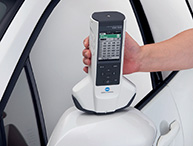
FD-7 Spectrodensitometer

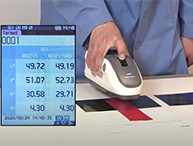
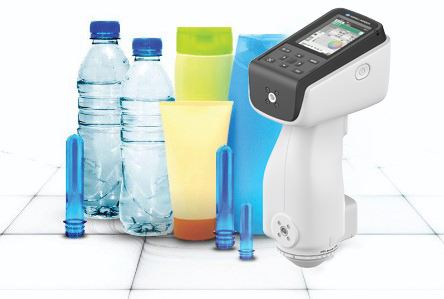
Next-generation measurement tools that streamline color adjustment in printing, even on substrates with fluorescent whitening agents. The FD-7 can measure the evaluation light source and then calculate data under that source.
Request a Quote
Image of Konica Minolta Spectroradiometer Image – Next generation color adjustment tool

Accurate evaluation, even on substrates with fluorescent whitening agents

As graphics-related industries shift more and more to digital methods, there is an increasing reliance on numerical control of the quality of printed materials as being both faster and easier than visual evaluation by the human eye. However, since the final materials are intended to be seen by the human eye, measurement results that closely resemble the results of visual evaluation are needed.

A potential problem is that the paper on which materials are printed influences the final viewed color. Many kinds of paper used for printing contain fluorescent whitening agents (FWAs) to make the paper appear brighter, and the effect of the paper fluorescence on the color of printed materials is particularly large when viewed under Illuminant D50*1. For this reason, ISO 13655-2009*2 defined Measurement Condition M1 as having illumination corresponding to CIE Illuminant D50 to minimize differences in measurement results due to paper fluorescence, but such effect was difficult to measure with conventional handheld spectrodensitometers.

The FD Series spectrodensitometers offer unique solutions to this problem by utilizing Konica Minolta’s original VFS (Virtual Fluorescence Standard) technology, enabling color evaluation while taking into consideration the fluorescence of the paper under Illuminant D50, the standard light source used by the printing industry for color evaluation. These are the first instruments to provide measurement results corresponding to ISO 13655 Measurement Condition M1.

*1 An artificial light source defined by the CIE having a spectral distribution simulating daylight commonly used for color measurement.

*2 ISO 13655-2009: Graphic technology – Spectral measurement and colorimetric computation for graphic arts images

Accurate evaluation, even on substrates with fluorescent whitening agents

  • Density and color control by printers
  • Measurement of fluorescence in R & D of printing machinery manufacturers and paper manufacturers
  • Printed color patch measurements
  • Input sensor for ink CCM systems
Share
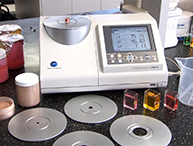
Intro image of FD-5 Spectroradiometer at Konica Minolta Sensing Americas, Inc. - Offers a wide range of Spectroradiometer products including chroma meter, color analyzer and more.

Today’s printers demand the very best in color matching for their customers and Konica Minolta Sensing again answers the call with the all new FD Series Spectrodensitometers. With a fully upgrade firmware the FD Series instruments further enhances the usability and operational capabilities of this world class spectrodensitometer, packing 11 new features and improvements, while still retaining the ability to simultaneously measure and account for density, color and fluorescence of the paper substrate.p>

Brand owners will find the improved features helpful in quality assuring their products over a multitude of industrial standards. The upgrade provides the most technologically advanced way of communicating color where users can easily store and share custom color data sets among vendors and/or production facilities

Major Improvements:

  • A polarization filter has been included as a standard accessory enabling the device to measure and adhere to the Measurement Condition M3 of ISO 13655
  • Printing quality control functions such as trapping, spot color density, and printing plate dot area
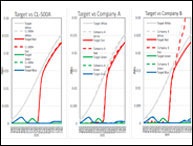
  • Target Match function displays the color difference of an ink from the target color and the density adjustment needed to bring the ink closer to the target color, allowing for better quality control of spot and process colors.
  • Pass/fail judgment against user defined targets AND industry designated targets such as ISO 12647, JapanColor, GRACoL/SWOP and PSO. Ideal tool for brand colors and on-site printing quality control allowing the evaluation of color difference, TVI and mid-tone spread
  • Gray balance feature allows for grays to be evaluated using the G7® specification method
  • Backing conversion feature allows the instrument to compensate for backing differences.  Very important when specifications are set for white backing and the printer need to measure on a black backing due to the nature of their work.
  • Data Management Software – Provide 3 key features:
    • Transfer measurement data directly into Excel spreadsheet
    • Manages “Color Sets” for both customized color libraries and industry guidelines like ISO 12647
    • Reading and registering of a user illuminant data.  The FD-7 measures a particular light source as a master instrument and data can be uploaded to FD-5/7 field instruments. Color control using the same illumination light source at multiple locations can be achieved. 
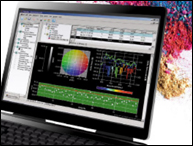
  • Konica Minolta’s own Spectra MagicNX v2.4 is now supported, allowing the users an easy-to-use intuitive color quality software.
Share
Model
FD-7
Illumination/viewing system
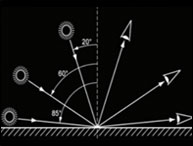
45°a: 0°(annular illumination) *1
Conforms to CIE No. 15, ISO 7724/1, DIN 5033 Teil 7, ASTM E 1164, and JIS Z 8722 Condition a for reflectance measurements
Spectral separation device
Concave grating
Wavelength range
Spectral reflectance: 360 nm to 740 nm
Spectral irradiance: 360 to 730 nm
Wavelength pitch
10 nm
Half bandwidth
Approx. 10 nm
Measurement area
Φ3.5 mm
Light source
LED
Measurement range
Density: 0.0D to 2.5D; Reflectance: 0 to 150%
Short-term repeatability
Density: σ0.01D
Colorimetric: Within σΔE00 0.05 (When white plate is measured 30 times at 10-second intervals after white calibration has been performed)
Inter-instrument agreement
Within ΔE00 0.3 (Average of 12 BCRA Series II color tiles compared to values measured with a master body under Konica Minolta standard conditions)
Measurement time
Approx. 1.4 s (single-point reflectance measurement)
Displayed values
Colorimetric values, color-difference values, density values, density-difference values, dot area ratio, dot gain, PASS/FAIL judgment, illuminance, correlated color temperature
Measurement conditions
Corresponding to ISO 13655 Measurement Conditions M0 (CIE Illuminant A), M1 (CIE Illuminant D50), and M2 (illumination with UV-cut filter); User-defined illuminant
Illuminants
A, C, D50, ID50, D65, ID65, F2, F6, F7, F8, F9, F10, F11, F12, User-defined illuminant
Observers
2° Standard Observer, 10° Standard Observer
Color spaces
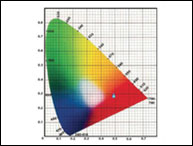
L*a*b*, L*C*h, Hunter Lab, Yxy, XYZ, and color differences in these color spaces
Color-difference equations
ΔE*ab (CIE 1976), ΔE*94 (CIE 1994), ΔE00 (CIE 2000), ΔE (Hunter), CMC (l: c)
Indexes
WI (ASTM E 313-96); Tint (ASTM E 313-96); ISO Brightness (ISO 2470-1); D65 Brightness (ISO 2470-2); Fluorescence index
Density
ISO Status T, ISO Status E, ISO Status A; DIN 16536
Storable data
Colorimetric target data: 30 data; Density target data: 30 data
Display language
English, French, German, Spanish, Japanese, Chinese (Simplified)
Scanning measurements*2
Scanning measurement of a color chart can be performed.
Interface
USB 2.0
Output data*2
Displayed values; Spectral reflectance data; Spectral irradiance data
Power
Rechargeable internal lithium-ion battery (Number of measurements per charge: Approx. 2,000 when new); AC adapter; USB power bus
Dimensions
(W × D × H)
70 × 165 × 83 mm (Body only);
90 × 172 × 84 mm (With target mask attached)
Weight
Approx. 350 g (Body only); Approx. 430 g (With target mask attached)
Operating temperature/humidity range
10 to 35°C, 30 to 85% relative humidity with no condensation
Storage temperature/ humidity range
0 to 45°C, 0 to 85% relative humidity with no condensation

Specifications are subject to change without notice.
∗1 Illumination for wavelengths under 400nm is unidirectional.
∗2 Available when using PC software.

Back to top

Suggested Accessories

Spectramagic NX Lite

Spectramagic NX Lite

Email to a friend

Shop KMSA

Catalog Download: Download PDF (2.5MB)

Owner's Manual:
Hardware Manual: Download PDF (467KB)
Demonstration Application Guide: Download PDF (467KB)

Case Study: Clemson University: Understanding and Controlling Color Download PDF (2MB)