
White Papers
Colorimetry
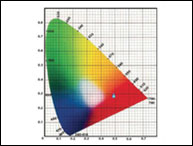
Colorimetry, the science of color measurement, is widely employed in commerce, industry and the laboratory to express color in numerical terms and to measure color differences between specimens. Applications include paints, inks, plastics, textiles and apparel, food and beverages, pharmaceuticals and cosmetics, displays, and other parts and products that reflect or transmit color. Read this white paper to gain greater insight into the world of colorimetery.
Controlling the Color of Plastics
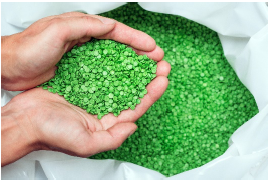
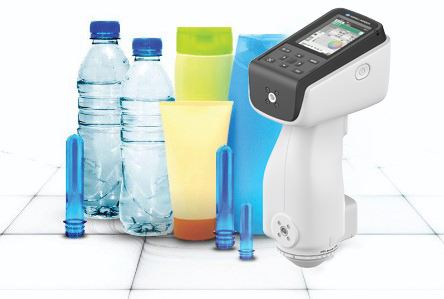
Just take a look around you on any given day and you will see just how integral a part of your world plastics has become. From the dashboard and door panels in the car you drive, the bottle that dispenses your ketchup, the housing of your laptop computer, the shower curtain in your bathroom, to the spring water you pull out of your refrigerator, plastics play a role in our everyday lives. Read this white paper to learn the value of controlling the color of plastics.
Advantages of Using Computer Color Matching
In today’s ever increasing competitive global economy, the maximizing of product output becomes ever more important. For those of us that deal with color as one of our product’s critical specifications, this can be a thorny and time consuming issue. Manufacturers that produce items such as paints, plastics, cosmetics and food will attest to not only the importance of having the correct color and appearance every order but also the time it takes to bring the color of a product into acceptable specification limits. This white paper explains in great details the advantages of using computer color matching.
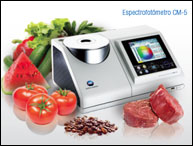
Food Industry Color Control the Color of Quality
In today’s retail world of behind glass, chilled, frozen, boxed, dried, vacuum-packed and plastic wrapped foods, eye-appeal is far more important than nose-appeal. Find out how Konica Minolta can help you measure and standardize your products' eye appeal.
Lighting Technologies, Principle, and Measurement
The proper measurement of light is a precise and complex science. The first step in correctly measuring light is to understand the basics: Color-Rendering Properties, Color Temperature, Light Distribution, Total Luminous Flux and Mura. This white paper provides a brief explanation of each lighting technology, giving an overview of each principle in simple terms. It also goes into detail describing the best and most accurate method for proper light measurement. This paper aims to introduce you to the world of light, and to help you understand how to measure it.
We don't currently have any white papers for this category.
Why Measuring Solar Simulators Is Important
Measurement of a solar simulator is a very important task and should be completed at least every 3 months. Lamps and power outputs of simulators change over time which can lead to less than optimal results when measuring photovoltaic cells. For optimal conditions including conforming to standard test conditions we recommend using a calibrated spectroradiometer for measurement. This documents details why and how you should measure your solar simulator to ensure accurate measurements.
We don't currently have any white papers for this category.
Product Design Workflow: New vs. Old How 3D Scanning Improves Product Design
This white paper describes the process and benefits of applying 3D laser scanning technology during the product design phase. We explore the various types of design: consumer, aftermarket, ergonomic and product re-design and provide step-by-step examples of typical workflows. By the end of this paper, you will have a better understating of how product designers and engineers are utilizing 3D scanning to improve the work process, save time, and money.
Spectroscopy: Measuring the Absorbtion Spectrum
In an absorption measurement, a spectrometer measures the amount of light that passes through a test sample and compares it to a reference sample to determine the amount of light being absorbed. By measuring the absorption spectrum of a particular substance (i.e. all the wavelengths that absorption occurs), it is possible to either identify it or place it in a particular group of compounds.