
From Frozen Storage to Intelligent Preservation: The Role of Hyperspectral Imaging in Seed Banks

While often thought of as the same thing, seed banks and seed vaults serve distinct functions within this system.
- Seed banks (or genebanks) are active facilities that store, test, regenerate, and distribute seeds
- Seed vaults are passive, long-term backup repositories designed for secure storage with minimal access
A simple way to think about it: Seed banks are the working libraries of crop diversity, while seed vaults are the off-site backups.
Real-world examples 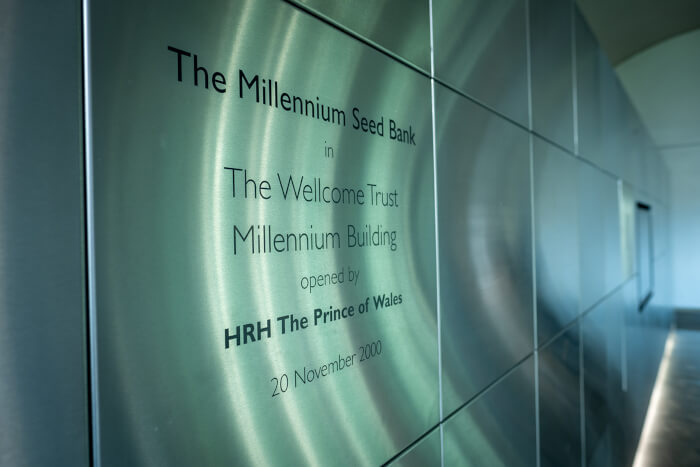
- The Millennium Seed Bank in the UK, operated by Kew Gardens, is one of the largest seed banks, actively storing and researching over 2.5 billion seeds from more than 40,000 plant species1
- The Svalbard Global Seed Vault in Norway is the most well-known example of a seed vault, storing over a million duplicate seed samples from genebanks worldwide under sealed “black box” conditions2
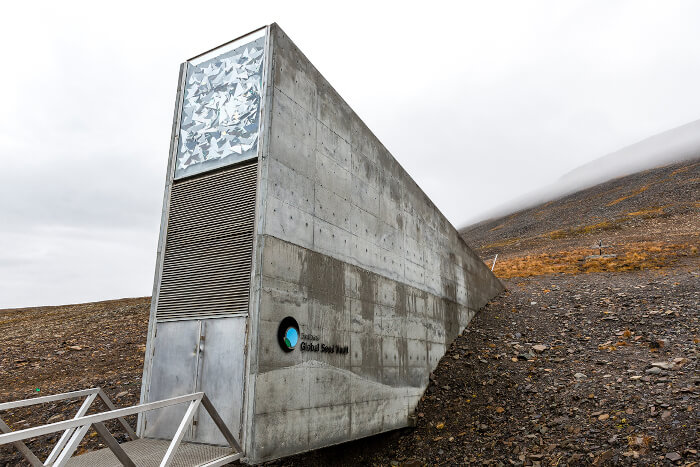 Over decades, this system has proven highly effective at preservation. However, one limitation remains consistent: While we store seeds extremely well, we have limited visibility into how they change over time without physically testing them.
Preservation Without Continuous Insight
Seed banks dry, seal, and store seeds under controlled temperature and humidity conditions designed to maximize longevity. Over time, samples are periodically removed and tested for viability, usually through germination trials.
This approach is reliable and well-established, but it has clear constraints:
- Testing is often destructive
- Monitoring is periodic, not continuous
- Regeneration decisions are typically time-based
This applies across major institutions such as:
- The USDA National Plant Germplasm System, which maintains over 600,000 plant accessions for research and agriculture3
- The International Rice Genebank at IRRI, housing over 130,000 rice varieties4
- The CIMMYT genebank, one of the world’s largest collections of wheat and maize diversity 5
Seed vaults take this even further. Facilities like Svalbard limit or even prevent access, functioning solely as backup storage for these active collections.
As a result, much of today’s system operates on scheduled verification rather than continuous measurement.
Hyperspectral Imaging: Adding a New Layer of Visibility
Hyperspectral imaging (HSI) offers a fundamentally different way to assess seed condition. By capturing both spatial and spectral data, it enables analysis of a seed’s chemical and structural properties without opening or damaging it.
Instead of relying solely on outcomes such as germination, HSI provides insight into the seed’s underlying state.
In seed research and quality control environments, HSI has demonstrated the ability to:
- Estimate viability and vigor
- Detect early-stage degradation
- Identify contamination
- Analyze composition (moisture, oil, protein)
This enables moving from indirect indicators to direct, non-destructive measurements.
How Hyperspectral Imaging Fits in Seed Bank Workflows
It is important to clarify: this technology applies to seed banks, not seed vaults.
Active facilities, such as USDA, IRRI, CIMMYT, and the Millennium Seed Bank, can integrate hyperspectral imaging into their workflows, whereas vaults, such as Svalbard, are not designed for analytical processes.
- Intake and Initial Characterization
At entry, seed banks scan seeds to:
- Detect hidden defects
- Identify contamination
- Establish a baseline spectral fingerprint
For example, a batch entering the Millennium Seed Bank could be profiled once and tracked over decades.
- Non-Destructive Monitoring
Instead of relying only on germination tests:
- Operators can rescan seeds periodically
- Analysts can track biochemical changes associated with aging
This is particularly valuable in large collections like:
- CGIAR genebanks, which collectively hold over 700,000 accessions6
- Data-Driven Regeneration Decisions
Regeneration is costly and resource-intensive.
With hyperspectral data:
- Decisions shift from schedule-based to condition-based
- Healthy seeds remain in storage longer
- Earlier identification of at-risk samples
Understanding the System: Banks vs. Vaults
Globally, seed conservation operates as a tiered system:
Seed Banks (around 900–2000 worldwide)
- Active facilities
- Examples:
- USDA National Plant Germplasm System
- Millennium Seed Bank (UK)
- IRRI Genebank (Philippines)
- CIMMYT (Mexico)
Seed Vaults (about 10 globally)
- Passive backup storage
- Example:
- Svalbard Global Seed Vault (Norway)
Key takeaway: Hyperspectral imaging is not a tool for frozen backup; it is a tool for active seed management.
Why This Shift Matters Now
Seed banks are scaling in both size and complexity:
- Millions of samples
- Thousands of species
- Increasing demand for precision
At the same time:
- Regeneration remains costly
- Monitoring is still limited
Technologies like hyperspectral imaging introduce:
- High-throughput, non-destructive testing
- Objective, repeatable measurements
- Integration with predictive analytics
This shifts the model from “Store and test occasionally” to “Continuously understand and predict”
Practical Considerations
Adoption will take time:
- Researchers must calibrate models across species
- Teams must establish data workflows
- Standards-driven environments require validation
This suggests a realistic adoption path: Starting in research-focused seed banks before scaling globally
Toward Intelligent Seed Conservation
With hyperspectral imaging, seed banks can begin to build:
- Baseline spectral fingerprints
- Long-term condition histories
- Predictive models of viability
This creates a new paradigm: Data-rich, non-destructive conservation
Conclusion
Seed vaults and seed banks together form a robust global system:
- Vaults provide security
- Seed banks provide management and access
Examples like Svalbard, Kew’s Millennium Seed Bank, USDA, IRRI, and CIMMYT illustrate how this system operates at scale.
Hyperspectral imaging does not replace these institutions; it enhances them.
The next step in seed conservation is not simply preserving seeds, but understanding them, continuously and non-destructively, throughout their lifespan.
1 Millennium Seed Bank – Banking the world’s seeds | Kew