
How Light Sources Influence Color Perception: Why Controlled Illuminants Matter in Modern Color Evaluation

This blog explains how standardized illuminants support reliable color evaluation, why lighting variation affects how colors appear, and how Konica Minolta Sensing instruments help professionals measure color accurately under both standard and real-world lighting.
How Light Shapes the Colors We See
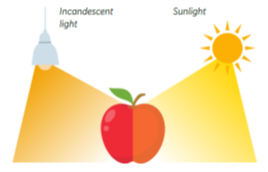
Color cannot be perceived without light. It is created when light reflects off or passes through an object and reaches the human eye, where it is interpreted by the brain. Different light sources have different spectral characteristics, which means the same object may appear lighter, darker, warmer, cooler, or even slightly shifted depending on the illumination.
This is why two items that look identical in one illumination environment may appear different in another. The inconsistency becomes a challenge for industries where appearance is part of the product’s value.
Standard Illuminants: A Foundation for Consistent Evaluation
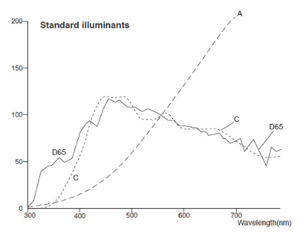 Organizations such as the CIE and JIS created standardized illuminants to provide globally consistent lighting conditions for color evaluation. Common examples include:
- D65: Average daylight (6504 K)
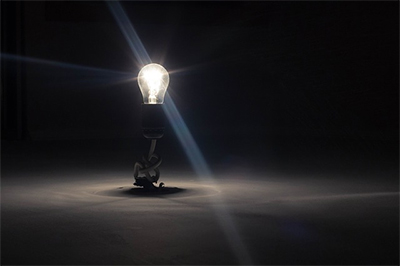
- Illuminant A: Incandescent light (2856 K)
- Illuminant C: Daylight without UV (6774 K)
- F-Series: Fluorescent lighting types
Color measurement instruments capture the spectral reflectance or transmittance of a sample and use this data to calculate color values under any selected illuminant. This process provides consistent and repeatable results even if the real measurement environment uses a different light source.
UserDefined Light Sources for RealWorld Environments
Today’s commercial spaces make heavy use of LED lighting, and LEDs vary widely in spectral distribution. Standard illuminants often do not match these conditions closely enough. To address this challenge, Konica Minolta Sensing developed a User Light Source Function in select portable spectrophotometers.
This function allows professionals to:
- Simulate actual store, gallery, production line, or showroom lighting
- Measure samples under custom userdefined illuminants
- Compare color appearance under multiple types of LED lighting
- Detect color shifts that would not appear under standard illuminants
Users can create a custom illuminant with Konica Minolta SpectraMagic NX2 software by measuring ambient light with the CL-500A Illuminance Spectrophotometer and use the spectral data to create a user defined illuminant or choose from nine CIE LED illuminants, including: LEDB1, B2, B3, B4, B5, BH1, RGB1, V1, and V2. These LED options represent a broad range of lighting widely used in commercial and industrial environments.
Metamerism Detection: A Key Part of Color Quality
Metamerism occurs when two samples match under one light source but look different under another. This effect causes unexpected mismatches in retail environments, manufacturing inspection, and product photography.
By evaluating samples under multiple illuminants (including userdefined LED light sources), metamerism becomes easy to detect. This reduces the risk of sending products to market that appear inconsistent to customers.
Industry Examples: How Eye Shadow Changes Under Different Lights
A cosmetic product such as eye shadow provides a clear example of why lighting matters.
In the Lab: Researchers select pigments under controlled lighting, often using D65 to create a stable reference.
In Manufacturing: Quality inspectors confirm that each production batch matches the intended shade under standardized lighting.
In Retail: Stores use various lights, including warm incandescent fixtures and cool LED systems. A color that appears bright and balanced under D65 may look noticeably different under certain LED lights. The product on the shelf may appear muted, warmer, or cooler depending on the store environment. This variation highlights the need to measure and compare color under lighting conditions that match realworld viewing.
Konica Minolta Instruments that Support Multi-iIlluminant Color Evaluation
Several Konica Minolta Sensing instruments support both standard and userdefined illuminants:
- CM-17d: Fast, accurate measurements on small, curved, or flexible surfaces
- CM-26dG: High precision color measurement and integrated 60-degree gloss
- CM-36dG: Color, transmittance, and 60-degree gloss in a single measurement
- CM-25cG: Compact 45°c:0° instrument with color and gloss measurement in one reading
These instruments help professionals understand how products will appear across a wide range of lighting conditions.
Conclusion
Color perception depends strongly on the lighting environment. Standard illuminants set a reliable baseline for evaluation, while userdefined LED sources provide insight into how products will appear in realworld settings. With the combination of both, professionals can manage color confidently throughout research, production, and retail presentation.