
Why U.S. brands should not wait for federal textile recycling laws
The regulatory picture in the United States
The U.S. is making progress in textile recycling with new federal incentives and state regulations. Proposed bills like the Americas Act would provide $14 billion for circular textile innovation, while the STEWARD Act aims to improve recycling infrastructure and data collection. Other federal efforts, such as the Responsible Textile Recovery Act of 2023, focus on creating a national extended producer responsibility (EPR) framework. On the state level, Massachusetts plans to ban most textile disposal by 2026. California’s SB 707 suggests an EPR program for clothing and shoes. New York now requires producers to set up textile collection and recycling programs, and Ohio and New Jersey are considering similar steps.
The states mentioned above are not alone. Policy groups and legal commentators describe similar bills that were introduced or reintroduced in New York and Washington during 2024 and 2025, frequently drawing on California’s structure. The Ellen MacArthur Foundation notes growing U.S. attention to textile flows and references California’s statute alongside New York’s proposal. Washington Legal Foundation summarizes the momentum and names those state efforts explicitly. The specific texts differ, but the pattern is consistent: a shift of end-of-life handling toward producers and their partners.
For brands working in several states, different rules can create compliance risks, make operations more complex, and add uncertainty about where to invest. Waiting for a federal standard might seem easier, but it can leave facility planning, supplier work, and data systems behind the first state requirements. This can increase costs and shorten the time to adapt, just when scaling up is important. The quick spread of packaging EPR laws shows how fast state action can grow.
Why preparation matters even without a federal mandate
There are several reasons to prepare now.
First: the U.S. does not have large-scale automated textile sorting. Most sorting is still done by hand, which limits how much can be processed and makes it hard to identify materials consistently. This also slows down the collection of reliable data for reporting and matching textiles to the right recycling process. Studies show that collection is
inconvenient for many households, sorting is manual, and most fiber is not recycled into new fiber.
Second: recyclers need stock that meet certain standards. Mechanical recyclers are affected by elastane content, while chemical recyclers need predictable blends and low contamination. If sorting is inconsistent, it can damage equipment and lower yields. This is a technical challenge, not simply a policy issue, and it will remain no matter how quickly states pass laws. [wlf.org]
Third: brands are expected to do more than just follow the law. Customers and investors want transparency. They ask what percentage of products use recycled materials, how take-back programs work, and if partners actually recover the material. Tracking data from sorting through reuse or recycling gives a solid base for these reports. Policy summaries show that new programs will rely on tracking and reporting, which is easier when identification is automated and recorded.
How we approach the problem with SpecimRETEX – Powered by Konica Minolta
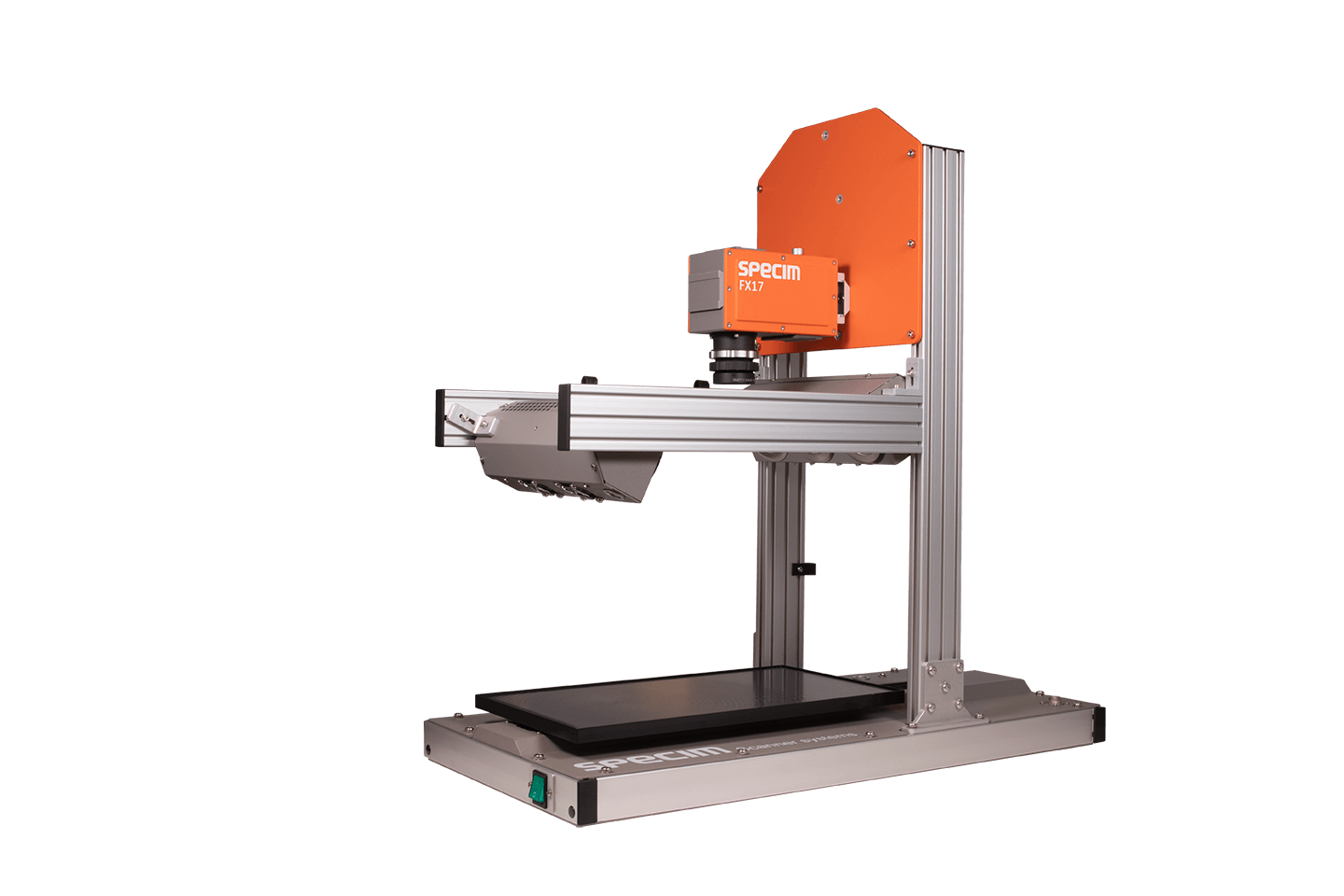
We concentrate on practical steps that fit real operations. SpecimRETEX – Powered by Konica Minolta uses Specim hyperspectral imaging and AI-based classification to identify textile materials in real time. We highlight retrofit options because many facilities want to upgrade existing conveyor lines instead of replacing them. We also support lab and R&D setups for teams to test and evaluate prior to scaling up.
SpecimRETEX – Powered by Konica Minolta can be set up to identify many types of cotton, polyester, and polyamide types, analyze blends like polycotton, and detect elastane. Depending on the setup, it can process up to five garments per second. These features help sorters shift from manual checks to automated, data-driven sorting while keeping up with production speeds.
Where this helps with emerging state requirements
If we look at early-stage laws and proposals to process requirements, several themes emerge.
Identification and reporting: State EPR models anticipate stewardship plans that cover collection, sorting, and the accounting of flows to reuse and recycling. Showing a need for verifiable material identification and data capture at scale. Automated spectral classification paired with analytics gives sorters and brands the ability to document what they collect and where it goes. California’s law delegates program development to a producer responsibility organization, which will define specific procedures and reporting requirements. We expect that auditable data at the point of sorting will make compliance easier to manage.
Matching feedstock to process: Recyclers need consistent input quality to succeed. For example, mechanical recycling cannot handle too much elastane, and chemical recycling works best with predictable blends. SpecimRETEX – Powered by Konica Minolta can identify elastane and analyze blends, helping teams send items to the right process. Your internal materials highlight how identification supports process protection, linking quality control and circularity goals.
Scalability: As state programs grow, collection volumes will increase through more drop-off sites and take-back partnerships. Manual sorting cannot keep up because of labor limits. Systems that process several garments per second with high accuracy help facilities plan for larger volumes.
Retrofit and modularity: Facilities do not move in lockstep. Some will begin with a lab configuration to build a library and train teams. Others will retrofit a sorting lane and iterate. SpecimRETEX – Powered by Konica Minolta offers options for both, helping organizations stage capital investments and learn before they scale. This approach is consistent with the state-by-state evolution of requirements.
Business considerations beyond compliance
If laws are not yet national, why act now?
First: there is a business case even without regulation. Sorted materials with known composition are more valuable and can be sold to recyclers for a higher price than mixed bales. Brands can use post-consumer materials that meet quality standards. The market will not change overnight, but early adopters gain experience, data, and supplier relationships that are hard to catch up with later. Policy studies show there is a lot of room for improvement in U.S. textile flows, and industry experts say downcycling is common because identification and collection are weak. Fixing these two issues creates more value.
Second: acting early lowers future compliance costs. Companies with take-back programs and automated sorting will be better prepared when a state adopts an EPR law. They will know their costs, bottlenecks, and what reporting they can provide. California’s law will require operational data for stewardship. Starting now makes these requirements part of daily operations.
Third: reputation and transparency matter. Retailers and brands that publish credible metrics about collection, sorting accuracy, and material reuse build trust. Policymakers and NGOs cite low U.S. recycling rates and growing waste as context for action. Telling a clear, data-backed story helps set expectations with customers and investors. We find that operational teams also benefit, as they can see progress rather than guess at it.
How we can help you in this process
At Konica Minolta Sensing, our goal is to make identification and data capture reliable at production speed. SpecimRETEX – Powered by Konica Minolta combines hyperspectral imaging with textile-specific AI models. On our website, we show how the system tells apart common fibers, recognizes blends within set accuracy, and detects elastane. We also explain how setups can scale from lab to industrial sorting and how retrofit options reduce disruption. These features are intended for practical results in sorting, quality, and reporting—not just to meet abstract targets.
The presentations you shared add useful context. They show how customers use SpecimRETEX – Powered by Konica Minolta to protect recycling equipment, how data helps adjust process settings, and how pilot projects support partnerships. They also cover expected speeds and the need for stable calibration and industrial design.
Closing thoughts
The U.S. will not follow the European regulatory timeline exactly, but it is still important to prepare. State laws are already in place, and more proposals are coming. Even without new laws, the market shows the same need: the country produces a lot of textile waste, recycling rates are low, and most sorting is manual. Automated identification and data management are key to moving from today’s challenges to a working circular system.
We invite you to work with us on a practical plan. Start small in the lab, pilot a sorting lane, and build a data foundation needed for stewardship programs. When federal standards arrive or more states act, you will be ready instead of reacting. SpecimRETEX – Powered by Konica Minolta is built to help make circularity a regular part of your operations.