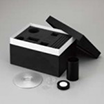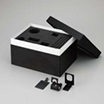

CM-5 Spectrophotometer
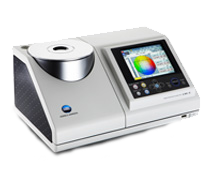
Click to Enlarge Thumbnails

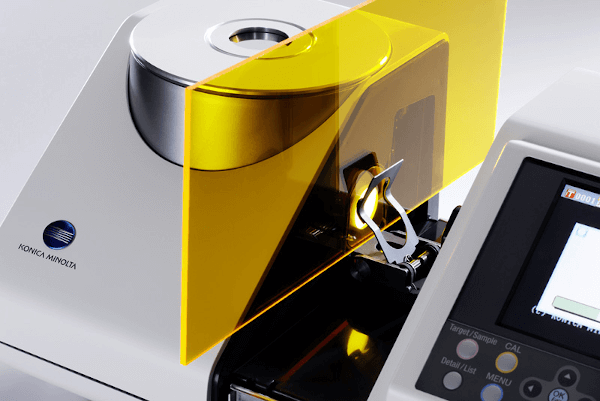
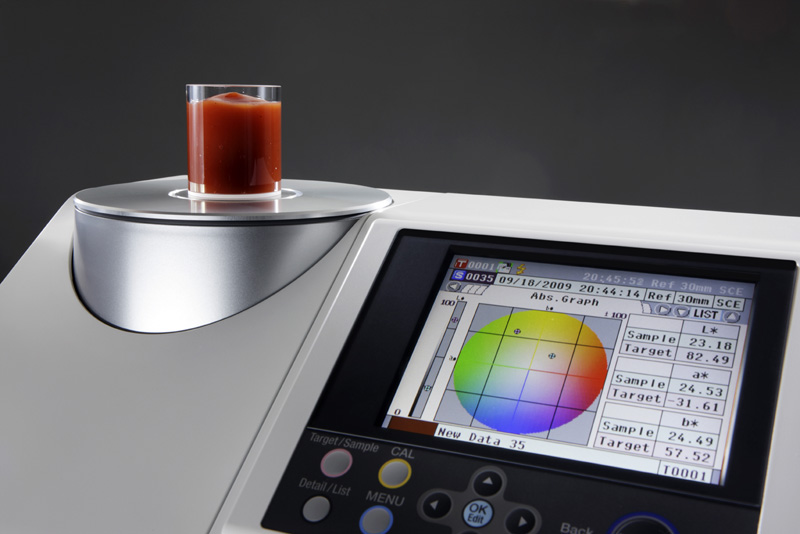
Click Here to Watch Video
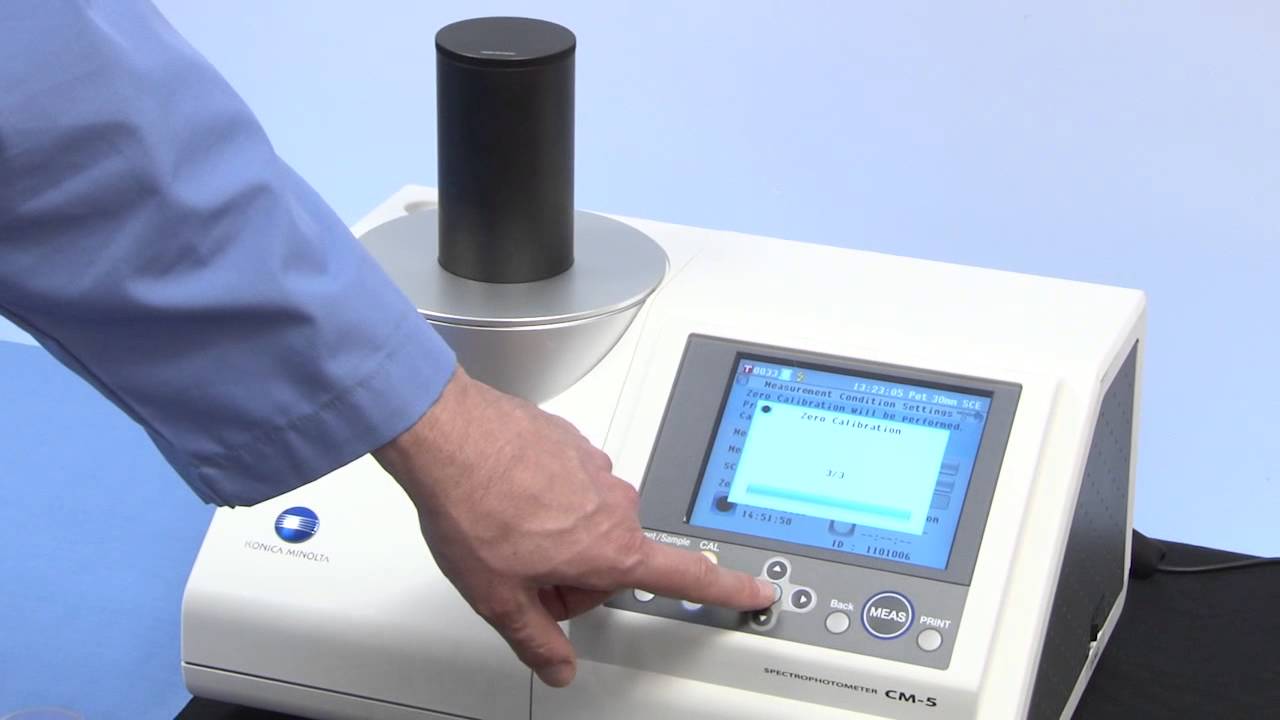
All-in-one color measurement for solids, liquids, pastes, powders and more
The CM-5 is a high-precision benchtop spectrophotometer engineered for quality assurance professionals who need reliable, repeatable color measurement across diverse sample types and demanding production environments. Its top-port design, large color LCD, and onboard software eliminate the need for a separate computer — delivering laboratory-grade accuracy from a single, compact instrument.
 Click here for the CM-5 Brochure.
Existing Customer?
If you're looking for service support, help with calibration or need technical support assistance then complete the Service or Tech Support Form and we'll get right back to you
Features
Measures virtually any sample form
Evaluate solids, liquids, pastes, powders, pills, and granules — opaque, transparent, or translucent — using one instrument.
Automatic calibration on every start-up
The internal white calibration plate calibrates the instrument automatically at power-on, maintaining consistent accuracy with no manual intervention.
Instant pass/fail judgement
Set color tolerances and receive immediate pass/fail results on the color LCD — ideal for production-line QA workflows.
No computer required
Onboard firmware with an Operation Wizard guides users through set-up and measurement. Color values, spectral graphs, and difference graphs display directly on the 5.7-inch TFT screen.
Industry-standard indices built in
Gardner, Hazen/APHA, Iodine Color Number, US Pharmacopeia, and European Pharmacopoeia indices are pre-loaded for fast, compliant measurement.
Multi-user ready
Store individual instrument settings and target color data on a USB memory stick, enabling multiple operators to work consistently from a shared instrument.
Specifications
| Model | CM-5 |
|---|---|
| Illumination/viewing system | Reflectance:
di:8 °, de:8 ° (diffuse illumination: 8 ° viewing) Transmittance: di:0 °, de:0 ° (diffuse illumination: 0 ° viewing) |
| Integrating sphere size | Φ152 mm |
| Detector | Dual 40-element silicon photodiode arrays |
| Spectral separation device | Planar diffraction grating |
| Wavelength range | 360 nm to 740 nm |
| Wavelength pitch | 10 nm |
| Half bandwitdh | Approx. 10 nm |
| Measurement range | 0 to 175 % (Reflectance or transmittance); Output/display resolution: 0.01% |
| Light source | Pulsed xenon lamp |
| Measurement time | Approx. 1 s (to data display/output); Minimum measurement interval: Approx. 3 s |
| Measurement/illumination area | Reflectance:
Changeable by changing mask and settings. LAV:Φ30 mm/Φ36 mm; MAV (optional):Φ8 mm/Φ11 mm; SAV (optional):Φ3 mm/Φ6 mm Transmittance: Φ26 mm |
| Repeatability | Spectral reflectance: Standard deviation within 0.1% (400 nm to 740 nm) Chromaticity value: Standard deviation within ΔE*ab 0.04 * When a white calibration plate is measured 30 x at 10-second intervals after white calibration |
| Inter-instrument agreement | Within ΔE*ab 0.15 (Typical) (LAV/SCI) (Based on 12 BCRA Series II color tiles compared to values measured with a master body under Konica Minolta standard conditions) |
| Transmittance chamber | No sides (unlimited sample length); Depth (maximum sample thickness): 60 mm Sample holders (optional) for holding sheet samples or containers of liquid samples can be installed/removed |
| Display | 5.7-inch TFT color LCD |
| Display languages | English, Japanese, German, French, Italian, Spanish, Simplified Chinese, Portuguese |
| Operating temperature/humidity range | 13 to 33 °C, relative humidity 80% or less with no condensation |
| White/100% calibration | Automatic white (reflectance)/100% (transmittance) calibration using internal white calibration plate (Not applicable to 100% calibration when using cells for transmittance measurements of liquids.) |
| Interfaces | USB 1.1 (Connection to PC; USB memory stick); RS-232C standard (Connection to serial printer) |
| Observer | 2 ° Standard Observer or 10 ° Standard Observer |
| Illuminant | A, C, D50, D65, F2, F6, F7, F8, F10, F11, F12, ID50, ID65 (simultaneous evaluation with two light sources possible) |
| Displayed data | Spectral values/graph (reflectance, transmittance, absorbance), colorimetric values/graph, color-difference values/graph, pass/fail judgment, pseudo color, color assessment |
| Color space | L*a*b*, L*C*h, Hunter Lab, Yxy, XYZ, Munsell, and color differences in these spaces (except for Munsell) |
| Index | Reflectance:
MI; WI (ASTM E 313-73, ASTM E 313-96); YI (ASTM E 313-73, ASTM E 313-96, ASTM D 1925); Transmittance: Gardner; Iodine Color Number; Hazen/APHA; European Pharmacopoeia; US Pharmacopeia |
| User index | User-defined index |
| Color-difference equation | ΔE*ab (CIE 1976), ΔE*94 (CIE 1994), ΔE00 (CIE 2000), ΔE (Hunter), CMC (l: c) |
| Pass/fail judgment | Tolerances can be set to colorimetric values (except Munsell), color-difference values, or reflectance index values |
| Storable data | Measurement data: 4,000 measurements; Target color data: 1,000 measurements |
| USB memory stick* storage | Storage of measurement data and target color data. Storage/reading of measurement condition settings * Security-enabled USB memory sticks cannot be used. |
| Power | AC 100 to 240 V, 50/60 Hz (using exclusive AC adapter) |
| Size | Slide cover closed: 385 (W) x; 192 (H) x; 261 (D) mm Slide cover open: 475 (W) x; 192 (H) x; 261 (D) mm |
| Weight | Approx. 5.8 kg |
| Operating temperature/humidity range | 13 to 33 °C, relative humidity 80 % or less (at 33 °C) with no condensation |
| Storage temperature/ humidity range | 0 to 40 °C, relative humidity 80 % or less (at 33 °C) with no condensation |
Industries Served
- Automotive
- Building Materials
- Food & Beverages
- Paint & Coatings
- Pharmaceutical & Cosmetics
- Plastics
- Textile & Apparel
- Chemicals & Laboratory
Frequently Asked Questions
What types of samples can the CM-5 measure?
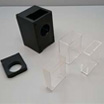
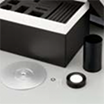
The CM-5 measures virtually any sample form — solids, liquids, pastes, powders, pills, and granules — in opaque, transparent, and translucent configurations. Liquid and powder samples can be measured using optional Petri dish accessories, while liquid transmittance measurements use 2 mm, 10 mm, or 20 mm cuvettes.
Does the CM-5 need to be connected to a computer?
No. The CM-5 operates as a fully standalone instrument. Its onboard software, Operation Wizard, and 5.7-inch color LCD enable complete measurement workflows without a PC. It can optionally connect to SpectraMagic NX2 for advanced data analysis and color formulation.
Is the CM-5 suitable for pharmaceutical color measurement?
Yes. The CM-5 includes built-in indices for both US Pharmacopeia and European Pharmacopoeia standards, as well as Gardner, Hazen/APHA, and Iodine Color Number — making it well suited to pharmaceutical QA and cosmetics manufacturing.
What is the difference between SCI and SCE measurement modes?
SCI (specular component included) measures the inherent color of a material independent of surface texture, while SCE (specular component excluded) measures the visual appearance as the human eye perceives it. The CM-5 switches between both modes, providing a complete picture of color and appearance.
Can multiple operators use the same CM-5?
Yes. Individual measurement settings, target color data, and calibration configurations can be saved to a USB memory stick, allowing different operators to load their own profiles quickly and work consistently on a shared instrument.

Suggested Accessories