
How Spectrophotometers Improve Fruit Maturity Evaluation

As quality standards continue to rise across the agricultural industry, more producers are turning to objective color measurement to improve accuracy and consistency. Spectrophotometers provide precise, repeatable color data that helps eliminate guesswork from maturity evaluations.
Using Color Data to Track Ripeness
Spectrophotometers measure color using standardized L*, a*, and b* values within the CIE L*a*b* color space. This system converts color into objective numerical data, making it possible to detect even subtle changes as fruit ripens.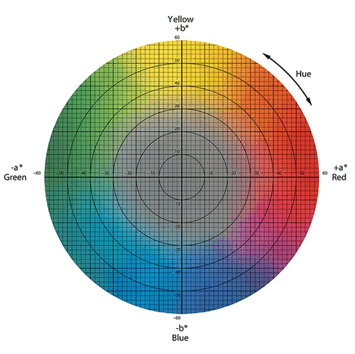
As maturity progresses, many fruits undergo predictable color changes. For example, increases in red pigmentation can be monitored through changes in a* values, while hue angle calculations can help track color transitions throughout the ripening process. This allows growers, researchers, and quality control teams to establish measurable maturity standards and make more informed harvest decisions.
Overcoming Common Measurement Challenges
Measuring fruit color accurately is not always straightforward. Fruits often have curved, uneven surfaces that can make consistent measurements difficult. In addition, taking measurements from the exact same location is critical when monitoring maturity over time or comparing samples between operators.
Without the proper instrument, these factors can introduce variability and reduce confidence in the data collected.
Why the CM-17d is Ideal for Fruit Maturity Evaluation
The Konica Minolta CM-17d Spectrophotometer is designed to address the unique challenges of agricultural color measurement. Its optional 3 mm aperture enables accurate readings on small, curved, and uneven fruit surfaces, while the built-in electronic viewfinder allows users to precisely target and verify the measurement location before collecting data. 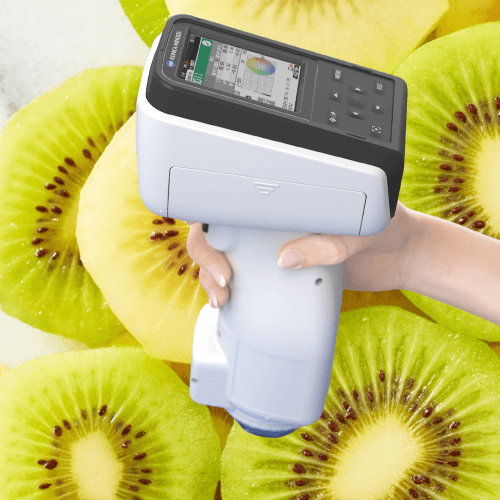
Additional benefits include:
• High measurement repeatability for reliable, consistent results
• Fast measurement speeds for evaluating large sample volumes
• Lightweight, portable design for both field and laboratory use
• Improved consistency between operators and measurement sessions
• Improve Consistency from Harvest to Quality Control
By replacing subjective visual assessments with objective color measurement, spectrophotometers help improve harvest timing, product consistency, and quality control processes. The CM-17d provides growers and food industry professionals with accurate, repeatable color data that supports better decision-making throughout the fruit production cycle.