The top five light measurement challenges facing engineers today

These advances have changed what engineers must measure and how they measure it.
Engineers developed many traditional light measurement methods for lighting systems that were relatively stable and predictable. Today, engineers routinely evaluate dynamic LED systems, high-luminance displays, complex spectral distributions, and globally manufactured products that must deliver the same visual experience wherever they are built.
At Konica Minolta Sensing Americas, we see a common challenge across industries: obtaining measurement data that accurately reflects how people perceive light while supporting engineering, manufacturing, and quality objectives. Engineers must evaluate not only brightness, but also color, spectral behavior, uniformity, viewing-angle performance, and consistency over time.
1. Measuring increasingly bright displays
Display technology continues to push luminance performance to new levels. Smartphones, automotive cockpit displays, digital signage, and industrial interfaces increasingly rely on high-brightness designs to maintain visibility in challenging environments.
As display brightness increases, engineers face measurement challenges that traditional methods do not always address effectively. High-luminance displays require instruments capable of accurately measuring peak brightness, contrast ratio, luminance uniformity, grayscale performance, and color stability across a wide dynamic range.
Automotive displays are a good example. Modern digital cockpits often contain multiple display technologies that must appear visually consistent under both direct sunlight and nighttime driving conditions. Small differences in luminance or chromaticity can become noticeable when viewing displays side by side.
To address these challenges, engineers increasingly rely on spot luminance meters, spectroradiometers, and imaging-based measurement systems. Solutions from Konica Minolta Sensing Americas, Radiant Vision Systems, and Instrument Systems help engineers evaluate luminance, chromaticity, uniformity, and display quality in ways that closely align with human visual perception.
2. Maintaining color consistency in LED lighting systems
LED technology provides exceptional flexibility, but it also introduces new measurement requirements. Even LEDs produced to the same specification can exhibit subtle chromaticity differences that become visible once products are installed in real-world environments.
For commercial spaces, healthcare facilities, architectural lighting, and automotive interiors, those differences can directly affect the user experience. Engineers therefore need to evaluate more than illuminance alone. Chromaticity coordinates, correlated color temperature (CCT), color consistency, and color rendering characteristics all play important roles in product performance.
The challenge becomes even greater with tunable-white and color-changing LED systems. Rather than measuring a single operating condition, engineers may need to validate performance across hundreds of possible color states.
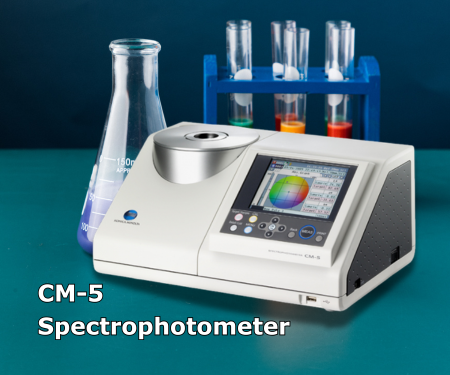
For these applications, instruments such as the Konica Minolta Sensing Americas CL-500A Spectrophotometer and CL-70F Spectroradiometer help engineers evaluate photometric and colorimetric characteristics simultaneously, supporting both product development and quality control.
3. Characterizing increasingly complex LED spectra
One of the most significant changes in modern light measurement is the growing importance of spectral analysis. Two light sources can produce identical illuminance readings yet appear noticeably different due to variations in their spectral power distributions.
This is especially true for modern LEDs, where semiconductor emission and phosphor conversion create highly application-specific spectral characteristics. Those characteristics influence color rendering, visual appearance, correlated color temperature, and the perceived appearance of illuminated objects.
As a result, many applications can no longer rely solely on lux measurements. Retail lighting, museum lighting, machine vision, display testing, and quality inspection applications increasingly require detailed spectral data.
Spectroradiometers from Instrument Systems and Konica Minolta Sensing Americas provide engineers with a more complete understanding of light source performance by capturing full spectral distributions. This enables more comprehensive analysis and helps ensure that measured performance aligns with application requirements.
4. Connecting laboratory measurements to real-world performance
Controlled environments remain essential for optical characterization, but products rarely operate under laboratory conditions. Displays encounter changing ambient light levels, lighting systems experience temperature variation, and automotive components must function reliably in diverse environments.
This creates a practical challenge: how well do laboratory measurements predict real-world performance?
Engineers increasingly evaluate spatial uniformity, viewing-angle performance, glare characteristics, and color consistency under realistic operating conditions. These measurements provide a more complete picture of visual performance than single-point measurements alone.
Imaging photometers and color imaging systems from Radiant Vision Systems have become particularly valuable for these applications because they allow engineers to assess light distribution and display uniformity across entire surfaces and identify defects that may not be visible with conventional measurement techniques.
5. Achieving measurement consistency across global operations
Many organizations now develop products in one location, validate them in another, and manufacture them in multiple regions. While this approach offers significant benefits, it can create measurement inconsistencies that affect development and production decisions.
Different facilities may use different instruments, calibration schedules, environmental conditions, or testing procedures. Even small differences can lead to disagreements about product compliance and quality performance.
Maintaining consistency requires more than selecting accurate instruments. Organizations also need traceable calibration practices, standardized procedures, and measurement systems that produce repeatable results across locations.
As manufacturing networks continue to expand globally, measurement consistency has become a strategic requirement for engineering and quality teams alike.
Looking ahead
The technologies shaping today’s lighting and display industries continue to evolve. High-dynamic-range displays, adaptive automotive lighting, advanced machine-vision systems, and emerging AR/VR applications all place new demands on optical measurement.
At Konica Minolta Sensing Americas, we view this evolution as an opportunity to bring photometric, colorimetric, and spectral measurement together within a single workflow. Through technologies from Konica Minolta Sensing Americas, Radiant Vision Systems, and Instrument Systems, engineers have access to tools that help them evaluate optical performance with greater accuracy and insight.
Engineers are adopting more comprehensive approaches to brightness, color, spectral analysis, real-world performance, and global consistency to keep pace with the next generation of lighting and display innovation.